
From My Reading Chair…
Madame M is not at home. This is, of course, where I enter… but should I?
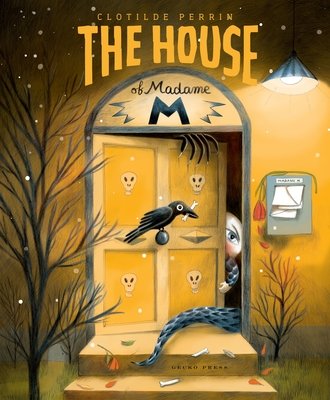
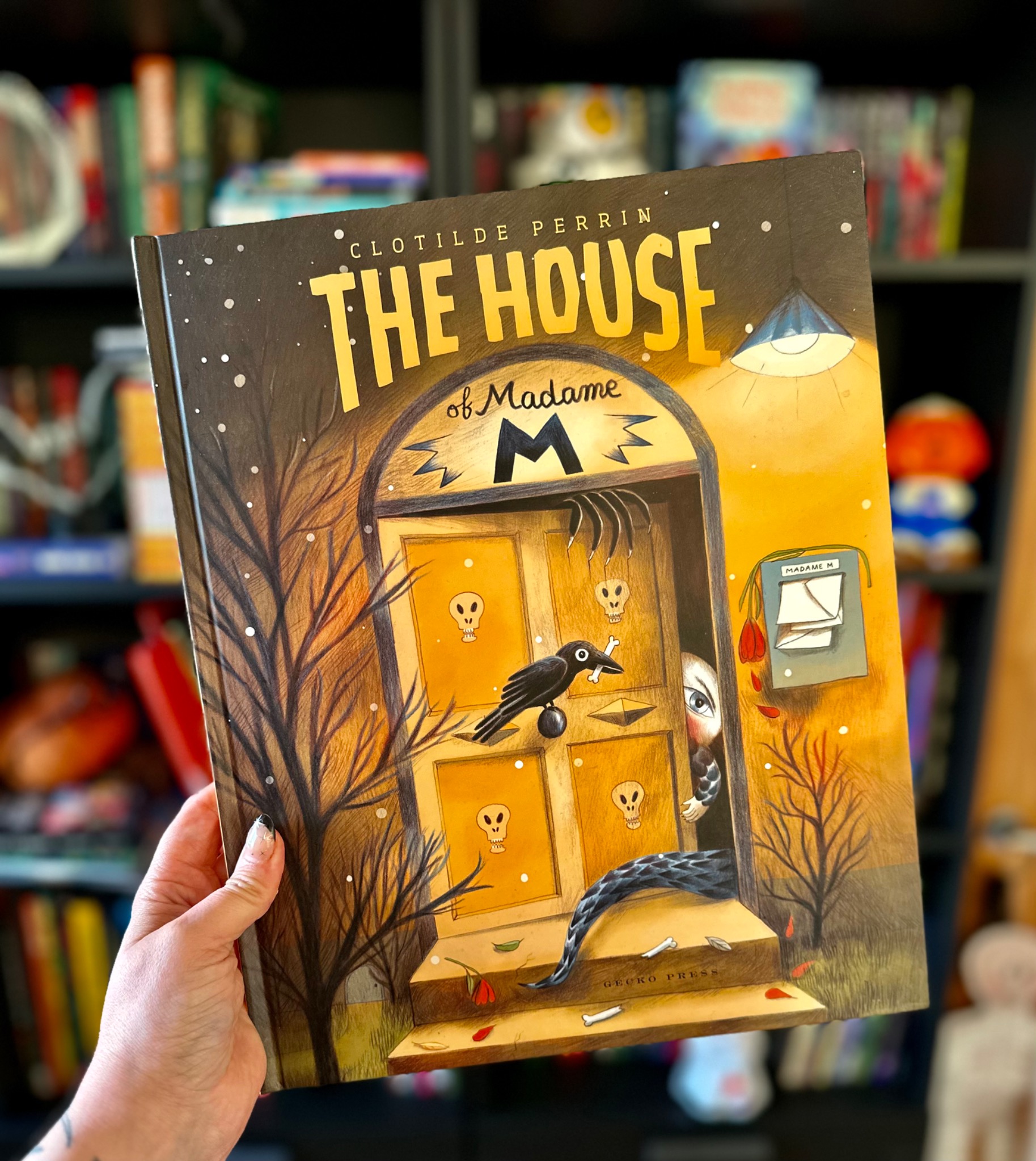
Even the cover makes trespassing feel like a decision baited with consequences. Somewhere between fairy tale and funeral parlour, Clotilde Perrin has built a house I absolutely should not enter. Unfortunately, she has also given me, of all people, an opportunity to do so...
I open the front door slowly, and inside, the book becomes an enchanted weird-wonderland of paper engineering. A sentient wardrobe dares me to creak open its door. As you do! A skull-bound suitcase waits with suspicious patience to be prised apart, ready to spill its proverbial guts. Why not! Drawers slide, envelopes open, flaps lift, wheels spin, tabs pull and pop-ups rise from the rooms with macabre finesse. Casual.
Each little mechanism makes me complicit: nothing happens until I interfere. Open something and out comes a joke, a threat or another small morsel of utter wrongness. I love it so much!
This is a great big book for some deeply questionable little investigations. Wide shutters allow horror to make an entrance, while smaller pockets and windows reduce the hand to furtive little acts of snooping. It completely envelops and devours your attention. Perrin understands that scale can alter nerves. This house is explored through the body as much as the eyeballs.
I find Clotilde’s artistry wonderfully difficult to pin down. Beautiful, bizarre and deeply unnerving. Fine, precise lines sit beside week-old bruised shadows, vegetation curls through the architecture and her colour palette gives every room the stale glow of something preserved for just a little bit too long. Her figures are elegant, grotesque and oddly weary. Nothing claws for my attention. It’s all rather muted, which only makes me want to linger and look closer.
It takes me back to Jan Pieńkowski’s Haunted House, and the pleasure of touching what ‘normal’ people would leave well alone. Pieńkowski’s house erupts with a kind of neon, graphic comic horror; Madame M’s unfolds like a lavish European cabinet of poisons, domestic cruelties and deathly jokes. In my head, Pieńkowski built the first house on the street, and Perrin has moved in with a Gothic manor a few doors down. What a cul-de-sac for literary trick-or-treating!
The story, translated into English by Daniel Hahn, leads us from hallway to living room, kitchen, bathroom and bedroom. The sparse commentary seasons rather than smothers the pictures. There’s just enough to keep me moving, although I’m hardly going to hurry through a house like this.
There is something deliciously domestic about all this deathliness. I love how the morbid and the mundane mingle here: bones, bizarre belongings and things best left unopened, all making themselves quite at home. The House of Madame M is dripping with ennui, morbid curiosity and papery mischief. It is an exquisitely engineered tasting menu of mortality for hungry little minds and groan-ups alike.
Madame M really ought to lock her doors. Fortunately for us, she hasn’t.
Creep on Reading, Pumpkins!