From My Reading Chair…
I had never really considered what Halloween might look like in a place that celebrates the tradition but without pumpkins. An apparently enormous oversight for somebody whose personality is approximately 73% Halloween, but pumpkins are so firmly stitched into the holiday that I had unconsciously treated them as universal.
Turns out, they are, in fact, not.
So what happens when children live somewhere pumpkins are difficult to access but still want their own portion of Halloween magic?
Not to sound like that awful man but ‘You improvise. You overcome. You adapt’. And sometimes, apparently, you make pumpkins fly!
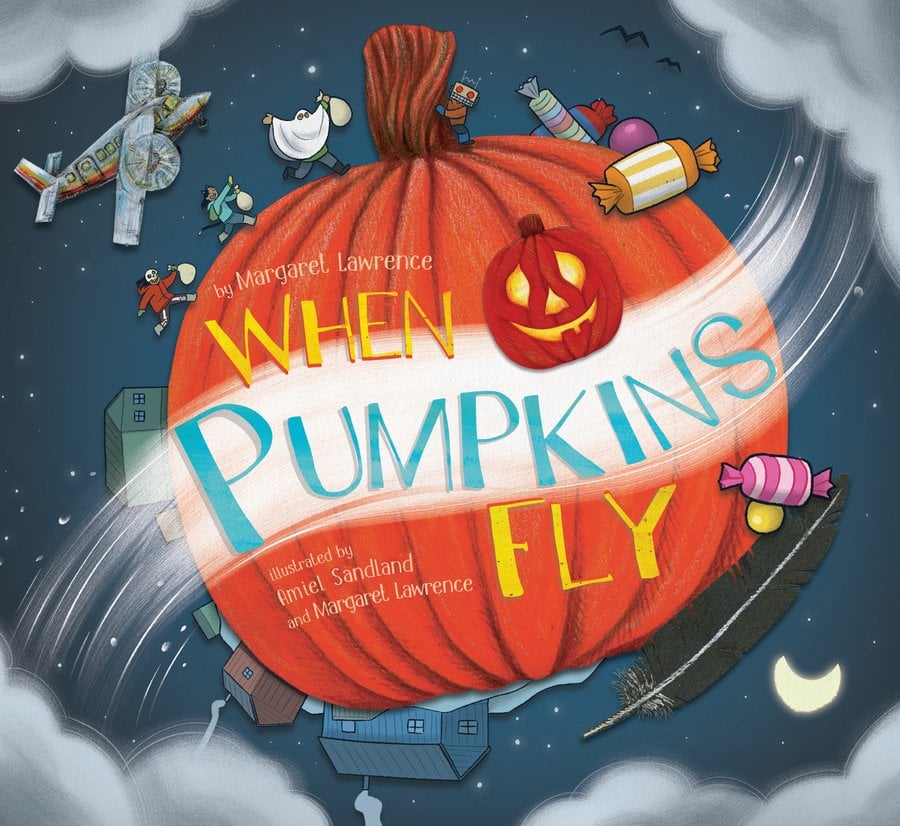
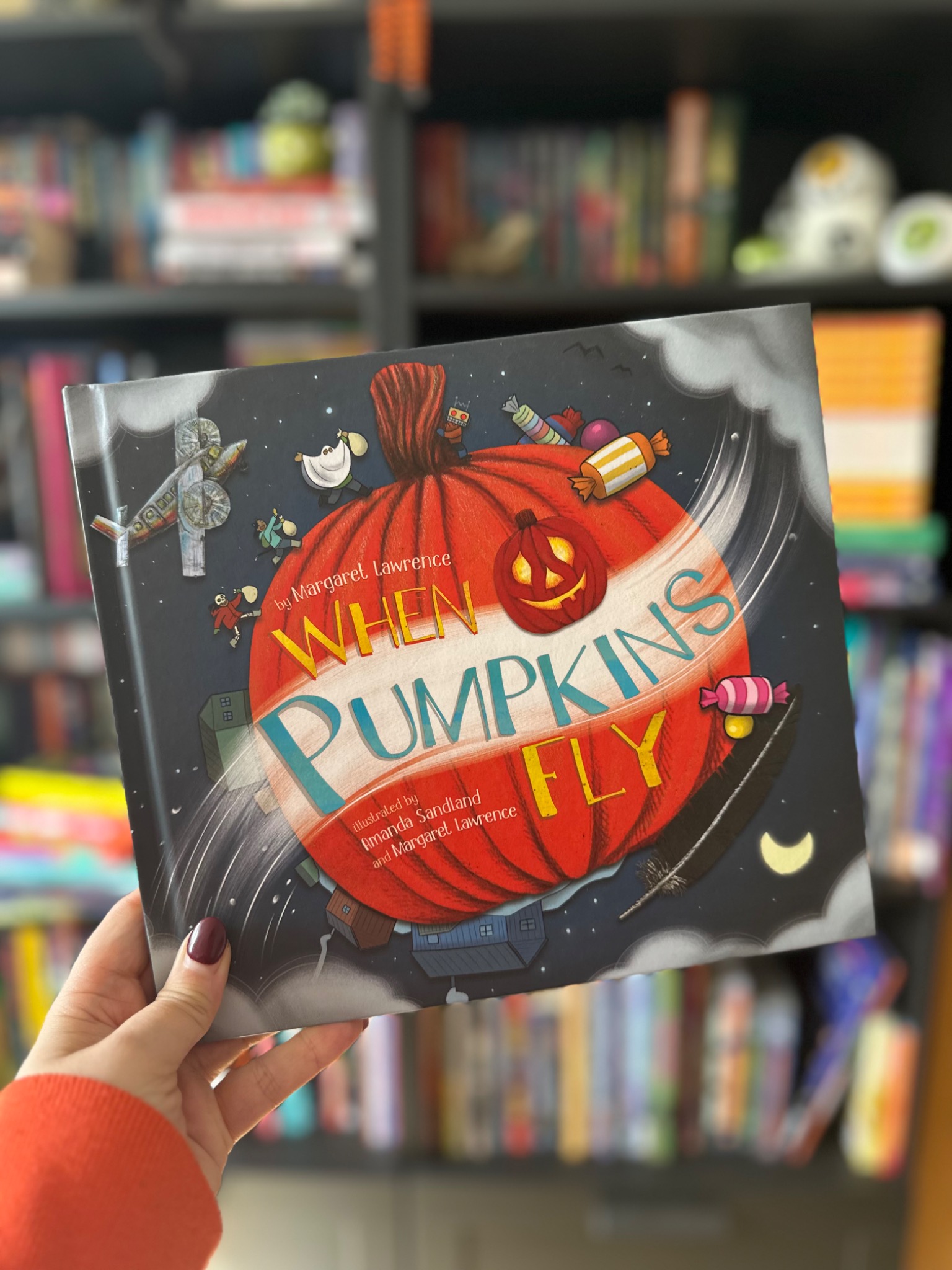
‘When Pumpkins Fly’ transports Halloween to a remote Arctic community, weaving familiar traditions together with Inuktitut language, community ingenuity and local folklore. I live for this.
I adored discovering how geography reshapes the celebration rather than diminishing it. Halloween does not disappear simply because its most famous orange vegetable is rather inconvenient elsewhere. Its magic is gathered up, reimagined and made meaningful to the children and community celebrating it. Then the tunnaat appeared. Ancient, wise beings living on the land within the story? Oh heck yes! My folklore-loving brain immediately rattled the bars of its enclosure and demanded MORE!
The world desperately needs more stories rooted in the particular folklore of particular places. More cultural specificity. More books that allow children to recognise their own traditions, or discover that the familiar celebrations they know can look vividly different elsewhere. The artwork is an intriguing cauldron of visual styles. Simplified, cartoon-like characters sometimes share a double-page spread with objects, such as an aeroplane, that appear more hand-drawn or collage-like.
The juxtaposition can feel enormous, almost as though two visual languages have landed on the same page at times. But then I found myself wondering whether this collision might form a symbolic bridge between longstanding cultural traditions and the contemporary community surrounding them. That’s where my mind went, anyway. The contrast certainly made me stop, look and think. And then we reach the pumpkin guts page.
Oh, the pumpkin guts in all their gloopy, stringy, magnificently revolting glory. A splendid splurge of orange innards that practically demands a chorus of disgusted noises from any children gathered around it.
I did not fall head-over-broomstick in love with every part of the book. The mixture of artistic styles did not always feel completely harmonious to me, and my connection was more appreciative than all-consuming. But still, its existence feels vital and I appreciate that although this book may not be my favourite one, it does not negate the opportunity for it to be someone else's.
Its unique blend of fact and fiction opens a door onto a Halloween shaped by geography, cultural knowledge, community and imagination. It asks us to consider who gets included in the way celebrations are usually pictured and what wonderful things we might discover when we look beyond those familiar images.
I would happily place this in a Halloween display or bring it into storytime. Not merely because it offers children a different representation of the holiday, but because it could open such rich conversations.
When one familiar ingredient is unavailable, people reach for their stories, their landscape and one another. Simply put, they find another way to make Halloween fly.
Creep on Reading, Pumpkins!